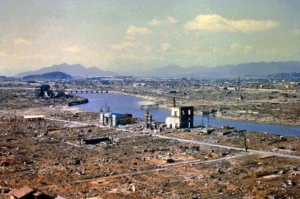
What does an economic miracle mean? More importantly, what could it mean for a nation that has already experienced unthinkable devastation? In August of 1945, Japan found themselves in one of the darkest periods of modern times. Cities were leveled to the ground in an instant. Thousands perished instantly from the effects of the two atomic bombs dropped on Hiroshima and Nagasaki. Not only that, but from Germany’s invasion of the Soviet Union weeks prior,Japan’s infrastructure had been left in ruins due to WWII.
After World War II, Japan went into a period of severe depression. It was estimated that 40% of civilian wealth was gone, and in 1946, mining and manufacturing were at 6.6% of pre-war levels. After a few years of the war, the nation’s standard of living was approximately 30% of what it had been before World War II. At the same time, Japan faced both physical destruction from war, a declining economy, and social trauma.
Japan averaged 9.6% growth between 1950 and 1973, compared to Europe at 4.7% and the United States at 3.7% for the same time period. Japan has achieved miraculous growth in such a short period of time since the atomic bombings of Hiroshima and Nagasaki. Japan wasn’t only bouncing back from these two events, but growing over twice as fast as Europe and much faster than the United States, establishing a new post-war world of reconstruction.
Additionally, according to the latest data from the OECD, Japan’s economy grew at an average annual rate of 3.8% between 1973 and 1987, well above Europe’s 1.9% and the USA’’s 2.5%. These statistics confirm that Japan’s immense rise was not simply a temporary boom; rather, it represents a thoughtfully planned national rebuilding effort, characterized by discipline, industrial policy, and most importantly, education.
Accordingly, the story of Japan’s recovery has much more to do with its transformation of the pain of atomic destruction and its experience with the Great Depression than it does with economic data alone; rather, the story of Japan’s recovery has much to do with its emergence as one of the world’s leading nations after World War II through an innovative reconstruction model based on discipline and investment in the future.
After its unconditional surrender in 1945, Japan became both physically devastated as a result of World War II and institutionally capable of transformation. The General Headquarters (GHQ) of the Allied Occupation began an extensive redesign of Japan’s education system between 1945 and 1952, eliminating militaristic ideology and replacing it with a focus on democratic and skill-based education.
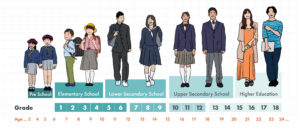
In 1946, the Shūshin, or moral education, was eliminated from the education system. The creation of a 6-3-3-4 education structure has led to an equitable and standardized educational framework. This frame consists of six years of elementary education, followed by three years each of lower and upper secondary school, before finishing four years of college/university. In 1947, the Fundamental Law of Education further institutionalized access to education through equal opportunity, co-educational institutions, and compulsory education, thereby establishing the foundation for a knowledge-based society.
As a result of these reforms and of Japan’s fundamental shift from an ideology-based to a productivity-based education system, Japan’s education system rapidly became part of an economic strategy. Education was seen as the primary vehicle for rebuilding Japan’s labor force, with a strong emphasis on science, technology, engineering, and mathematics (STEM). The Japanese Education System was designed primarily to meet the industrial demand for literate, disciplined, and technically skilled workers to directly support companies such as Toyota, Sony, and Panasonic.
By the 1970s, 90% of the population had completed high school education, creating a continuous availability of educated workers who can provide a high level of performance for an expanding industrial base from the 1970s to 2000s through the “education-to-employment pipeline,” which described the relationship between academic performance and placement by a corporation, i.e., the level of productivity within a nation.
Japan’s education system is widely recognized for its structured developmental pathway, where teaching methods evolve strategically from early childhood to higher education, ensuring both social discipline and academic excellence. In early education through yochien (kindergartens) and hoikuen (daycare centers) the focus is not on academic pressure but on holistic development.

Play-based learning teaches independence, group cohesion, and emotional intelligence. Japanese early education is rooted in self-discipline; for instance, students clean their classrooms themselves, fostering a sense of responsibility. According to Japan’s Ministry of Education (MEXT), over 95% of children aged 3–5 participate in early childhood education, reflecting strong nationwide access and cultural prioritization of foundational learning.
At the high school level (kōtōgakkō), Japan transitions into a highly competitive academic environment. Although not compulsory, over 97 % of students continue to upper secondary education, and this stage becomes a critical preparation period for university entrance exams. Teaching is structured, exam-oriented, and performance-driven, with students often attending extra cram schools (juku) to enhance test readiness. The system is largely divided into academic and vocational streams, aligning students early with either university pathways or workforce entry. This rigor ensures that Japan maintains one of the highest secondary completion rates among OECD countries, producing a highly literate and disciplined youth population.
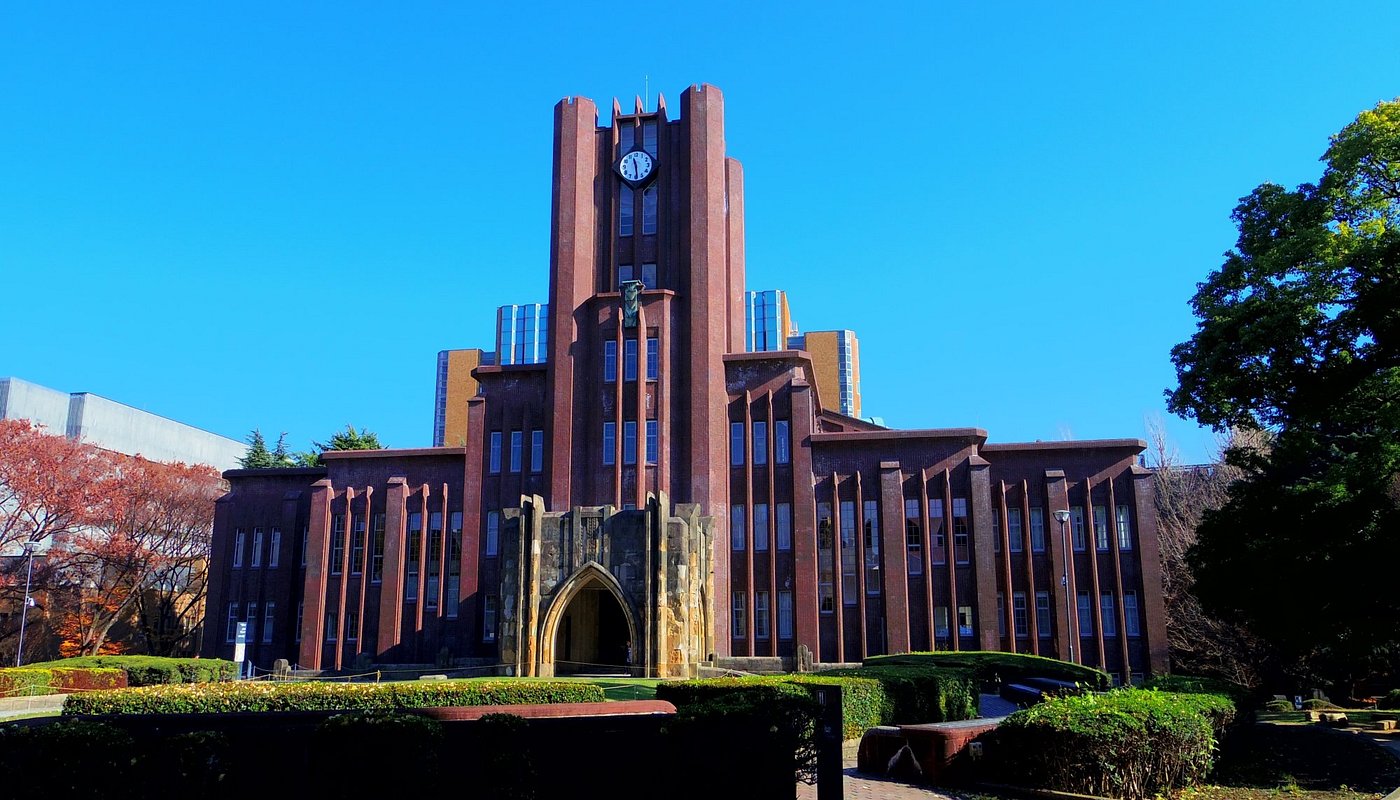
At the university level (daigaku), Japan’s system is dominated by high-stakes entrance examinations, where admission into elite institutions is intensely competitive. Universities such as the University of Tokyo (Todai) function as primary gateways into Japan’s administrative and corporate elite, producing a significant proportion of senior bureaucrats and top executives.
Similarly, Kyoto University plays a leading role in fundamental research and scientific innovation, contributing heavily to Japan’s global R&D output. Private institutions such as Keio University and Waseda University are renowned for producing leaders in commerce, media, and international business. Collectively, this system ensures a seamless pipeline from disciplined early education to elite professional leadership, reinforcing Japan’s globally competitive knowledge economy.
Japan’s education system is the most highly structured, globally competitive, and knowledge-producing system worldwide; consistently ranking above many highly developed nations across all forms of foundational learning outcomes. In 2000, Japan began participating in the OECD’s PISA assessment program, and routinely ranks among the top-performing nations in mathematics, science, and reading, reflecting Japan’s national emphasis on analytical reasoning, discipline, and STEM literacy.
In the 2022-2023 PISA cycle, Japanese students excelled again in mathematics and science, placing them among the top tier of OECD nations and above the world average in cognitive proficiency. Similarly, the results of TIMSS 2023 confirm the same trend, showing that the performance of Japanese 4th graders can be ranked 5th in mathematics and 6th in science, as well as Japanese 8th graders can be ranked 4th in mathematics and 3rd in science; this shows a strong track record by Japan across education stages and generations for providing excellent learning opportunities for children throughout their school years.
In Japan’s innovation economy, the development of human capital through higher education is a fundamental component. Of those aged 25-34 years at the time of the 2025 OECD report, 66% hold a tertiary qualification, making Japan one of the most educated workforces among developed nations. The excellence of this educated workforce supports Japan’s influential global universities, including The University of Tokyo (Todai) and Kyoto University, as world-class research institutions producing major contributions to physics, medical science, artificial intelligence (AI), and materials science, on an ongoing basis.
In addition, universities such as Tokyo Institute of Technology and Osaka University make critical R&D contributions to Japan’s engineering and biomedical innovation pipelines, as does Nagoya University’s strong involvement in automotive engineering and technical research. Collectively, these universities solidify Japan’s role as one of the world’s leading R&D powerhouses, supported by strong university-industry partnerships resulting in a significant number of patentable contributions to innovation.
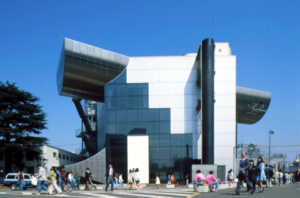
Japan’s academic center of excellence is augmented by leadership and regionally based institutions, Keio, Waseda, and Hitotsubashi Universities, which produce highly qualified human resources for the finance, government, media, and global commerce industries. Concurrently, regional universities such as Tohoku University and Hokkai-Gakuen University help to transfer knowledge production away from the governmental center to support regional economic ecosystems through education in business, law, and social science.
These many layers of institutions comprise Japan’s educational system. Functioning as an efficient engine of the knowledge economy, it continually generates quality research and helps maintain Japan’s competitive edge in manufacturing, technological advances, and overall global economic prominence.