
The Viral Movie Craze: A Gen Z Perspective on Trends 

Open Instagram or TikTok right now and chances are you’re seeing trendy soundtracked slideshows from Oscar-buzzy movies. Barbie, Oppenheimer, and Dune: Part Two, blockbuster films have been buzzing harder than ever before. We’ve entered a new era where popular films are more than just background noise. They’re events. So what makes a movie go viral? Let’s analyze active Gen Z numbers to find out. Being in the business of YouTube/content creation, I like to think of this new wave as movie culture evolving. There is a science behind how these younger generations are building their media diets to one up each other. It’s a competition to see who can find the coolest weekend activity. Okay, maybe that analysis is a little simple. But from a sociology perspective (and number standpoint), let’s break down the formulas of virality. Experience The Magic: The Power Of Collective Viewing Audiences are interacting with films more now than ever. Both Barbie and Oppenheimer released the same weekend, creating the phenomenon “Barbenheimer” and creating a new understanding for the financial strength of shared experiences. It propelled this July’s opening weekend to a record-breaking $310 million domestically alone. Overall, the two films made over $2.4 billion worldwide. Audience excitement online can indeed move the needle. So did Dune: Part Two, racking up colossal amounts of global hype and digital momentum across platforms. The science-fiction film made a handsome $715 million at the global box office proving that if a film catches pop culture’s attention, it will sell tickets. In fact, attendance from Gen Z cinema-goers has increased by 25 percent over the past year. They now spend an average of 6.1 visits to the theater per year and crave shared experiences like never before, both in person and online. The Power of Aesthetic Currency in Capturing Gen Z’s Heart Visual identity has never been as important as it is in our screen-swallowing world. Barbie hypnotized TikTok with its coordinated, ultra-fuchsia, aggressively aspirational aesthetic. Dune: Part Two transported viewers through epic sandy vistas that emphasized a crushing feeling of insignificance and environmental detachment. Oppenheimer punched you in the mouth with some grimy “very metal” stylistic gusto. No movie comes out these days without the conscious effort to make it as rebloggable as possible. Within the Instagram feed of your everyday Zoomer, these movies still become hard currency. Whether it’s one good shot that becomes a new phone wallpaper, the inspiration for a TikTok, or carefully curated within an Aesthetic Instagram mood board. Movies are able to virally market themselves to Gen Z simply by having a well-established…vibe. What Makes Identity Templates Relatable in Storytelling? Themes within contemporary blockbuster films relate to identity formation as many people today are extremely displaced and living in a state of dread. Barbie dove into an identity crisis and allowed its younger viewers to question who they are and how social constructs can be limiting. Oppenheimer displayed the paralyzing effects of extreme moral ambiguity and what it means to live in a world of great technological devastation. Paul Atreides from Dune was the embodiment of oppressive fate, political dysphoria, and unwanted change during times of global chaos. Members of this generation are living through intense sociopolitical and economic change. There is a lot of algorithmic stimulation that millennials and Gen-Z’ers experience, and we are constantly seeking media that we can relate to. Whether that be relating to our identity, feeling of purpose, or levels of anxiety. In order for a movie to be relatable these days, you have to understand the individuals that you are trying to reach and show the truth through your story. If you’re able to allow your audience to box their emotions during times of uncertainty, you will find your movie lasting longer. The Impact of TikTok’s Algorithm on Modern Social Media Let’s face it: TikTok has been and continues to be one of the strongest platforms when it comes to building massive virality for movies and entertainment trends. TikTok has surpassed 1.58 billion monthly active users worldwide and users spend an average of 95 minutes on the app per day. 60 percent of TikTok users are from Gen Z directly. Let’s say you want to reach Gen Z; you have to be on TikTok. The algorithm favors high engagement rather than who has more followers, which means the game has changed when it comes to movie marketing. Gen Z will not sit back and watch something. They will overanalyze every second of a movie and piece it back together how they want. Whether it’s analyzing every conspiracy theory about what something in the movie could mean or breaking down symbolism or recreating their favorite endings, movies have become year-long social media discussions. This creates continuous engagement and can help a movie trend well past its two hour lifecycle. When sound trends and users create full video essays on films, you can make that moviegoer feel like they already got hit with FOMO, and convince them to buy a ticket to see a movie in theaters. Quality vs. Hype: The Future of Digital Architecture The worldwide cinema landscape has been dominated by event films recently as audiences have come to exclusively expect big-budget film experiences that can only be felt in-person. Necessarily coming with this new era is the argument of if these events are successful based on merit or if there’s just simply more hysteria around them. People who stand for film quality are right to say that films like Dune and Oppenheimer actually do provide substance. You can’t trick people with algorithmic HYPE if your final product isn’t genuinely worth it and you’ll burn a studio down for good. What you need to have is a perfect balance of both quality and memorable moments to truly dominate pop culture. Quality will ensure your movie lives longer than its social media cycle, while HYPE will help it break through to achieve that overnight buzz. We’re quickly entering an age of films being made with virality already at

The Viral Movie Craze: A Gen Z Perspective on Trends  Read More »

The Great Unfolding: How Ancient Eschatology Is Shaping Today’s Geopolitics

Death has long stalked history, as all civilizations have produced some apocalyptic mythos: stories about cataclysm and redemption at the end of days. Mythos have been described as resilient, geopolitically significant, or aggressively mutating as those found in Judaism, Christianity and Islam. Between 2023 and 2026, something extraordinary happened: the apocalypse caught up with reality. Conflict after conflict erupted in the Middle East, climate change began to be described in biblical language. Russia emerged from its post-Cold War malaise yelling about Mother Russia and God (a national personification of Russia). The statistics are quite staggering. The UNHCR recently reported a sobering milestone: over 117 million people are now displaced globally. From record climate disasters to the echo of war across continents, 2024 feels less like a series of isolated events and more like a collective breaking point. China continued its inexorable rise, as robots became scary enough to start inspiring religious iconography. The future arrived, and an older way of thinking about the future began to inform real-world geopolitics like never before.  If you’ve paid any attention to current events over the past few years, you’ve likely heard traces of references to Biblical End Times, the Rapture, Sunni-Shia strife, the Axial Age, Jesus Christ Second Coming, manifestations of the Imam Mahdi, Jewish voices prophesying about how the Messiah will return to Jerusalem, or why he won’t. While some of these voices have been extremist, many have not.  Predictive lenses steeped in eschatological traditions—whether dispensationalism, Islamic teachings about the Mahdi, or Jewish ideas about the Messiah—are now shaping how world leaders and populations act, feel, and perceive with the world around them. If you want to understand what’s going on in the world today, you need to understand how these idea systems are playing a role. Welcome to Apocalypse Redux. Is it Islamic apocalyptic predictions, Christian end-time prophecies or Jewish Messianic expectations that have you up at night?.  With all the daily drama in the world, the Biblical Book of Revelation may feel more familiar than the morning paper. If so, you’re in good company. In a world of Hyper-globalization and belief systems, where does the lens of eschatology fit in? Is there a weight that these worldviews hold that we should be listening to? Or is there a reason that these prophecies can fall on such deaf ears?. It might be because we are looking for a “why” that goes beyond the policy briefs. When we read about war in the Middle East, economic upheaval and climate change, are we experiencing instability in the world, or are we experiencing the unraveling of an ending?. So, if you have been feeling that end times, it’s not just you. We are all having an identity crisis when it comes to making sense of a world that is spiraling beyond our control, and the three Abrahamic faiths have a lot to say about why. Ancient Eschatology: The New Language of Our Times Whether in the Middle East or social media forums around the world, Biblical/world prophecies are being compared to current events more than ever before. Millions of people around the world now use stories that were once familiar only to readers of the Bible to make sense of life. Christians compare the current state of war and economic change to Bible prophecies of the Second Coming of Jesus and the tribulation period known as Armageddon. Many believe that these disasters are not mere coincidences, but rather part of the “birth pains” that will occur before Jesus returns to reign on Earth. By aligning present-day events with the End Times, many Christians are coping with current world affairs by tracking how many signs have occurred before Jesus returns. Similar to Christians, Muslims also share apocalyptic beliefs. As we approach the 14th century Hijri, and the year 1447 AH in the Islamic calendar, many Muslims are discussing the signs of Qiyamah (Islamic Doomsday). The return of Imam Mahdi and Isa (Jesus), as well as the deception of the Dajjal, are heightened as many countries around the world continue to destabilize, creating a wave of refugees and displaced persons. By correlating current events to the arrival of these figures, many Muslims view today’s disasters as just a glimpse of what’s to come when the Dajjal arrives. Rounding out the three major Abrahamic religions, many Jewish people are also entering 5786 by reflecting on their beliefs about the Messianic Age and stories of Redemption. Jews around the world are approaching the 6th Millennium by reflecting on what the change in years means for the restoration of the nation of Israel and for healing the world. Like their Christian and Muslim counterparts, Jewish people are finding meaning within current events by seeing them as indicators of the Messiah’s arrival. No matter the source of their pessimism—global warming, artificial intelligence, overpopulation—you name it—religious people around the world are searching for meaning by correlating current events to prophesied events of the End Times. Conflict And Apocalypse: A Deep Dive Into Their Nexus The post-2023 international order has become an infinite blur of Apocalypse narratives in 21st-century geopolitics, stretching from the Levant to the Caucasus and beyond. While politicians and pundits argue over whether this state of affairs is beneficial, the intersection of religion and global instability has noted what they believe is an apparent eschatological trend. Although the so-called US–China Cold War and great power competition have taken center stage, events are now routinely discussed against a mystical backdrop and within the apocalyptic vernacular. We see this type of behavior with the ongoing Israeli–Iranian and Israeli–Palestinian conflicts, both of which are increasingly viewed as events that will culminate in Armageddon, or the Battle of Gog and Magog. These events are widely believed to precede the Second Coming of Christ, at least within the context of Christianity. As far as the Islamic narrative is concerned, violence and strife in the Middle East and the wider region are believed to precede the rise of Imam Mahdi and the return of

The Great Unfolding: How Ancient Eschatology Is Shaping Today’s Geopolitics Read More »

From Hiroshima to Innovation: A Tale of Resilience and Technology

What does an economic miracle mean? More importantly, what could it mean for a nation that has already experienced unthinkable devastation? In August of 1945, Japan found themselves in one of the darkest periods of modern times. Cities were leveled to the ground in an instant. Thousands perished instantly from the effects of the two atomic bombs dropped on Hiroshima and Nagasaki. Not only that, but from Germany’s invasion of the Soviet Union weeks prior,Japan’s infrastructure had been left in ruins due to WWII. After World War II, Japan went into a period of severe depression. It was estimated that 40% of civilian wealth was gone, and in 1946, mining and manufacturing were at 6.6% of pre-war levels. After a few years of the war, the nation’s standard of living was approximately 30% of what it had been before World War II. At the same time, Japan faced both physical destruction from war, a declining economy, and social trauma. Japan averaged 9.6% growth between 1950 and 1973, compared to Europe at 4.7% and the United States at 3.7% for the same time period. Japan has achieved miraculous growth in such a short period of time since the atomic bombings of Hiroshima and Nagasaki. Japan wasn’t only bouncing back from these two events, but growing over twice as fast as Europe and much faster than the United States, establishing a new post-war world of reconstruction. Additionally, according to the latest data from the OECD, Japan’s economy grew at an average annual rate of 3.8% between 1973 and 1987, well above Europe’s 1.9% and the USA’’s 2.5%. These statistics confirm that Japan’s immense rise was not simply a temporary boom; rather, it represents a thoughtfully planned national rebuilding effort, characterized by discipline, industrial policy, and most importantly, education.  Accordingly, the story of Japan’s recovery has much more to do with its transformation of the pain of atomic destruction and its experience with the Great Depression than it does with economic data alone; rather, the story of Japan’s recovery has much to do with its emergence as one of the world’s leading nations after World War II through an innovative reconstruction model based on discipline and investment in the future. What Is The Phoenix Formula Behind Japan’s Resurgence? After its unconditional surrender in 1945, Japan became both physically devastated as a result of World War II and institutionally capable of transformation. The General Headquarters (GHQ) of the Allied Occupation began an extensive redesign of Japan’s education system between 1945 and 1952, eliminating militaristic ideology and replacing it with a focus on democratic and skill-based education. In 1946, the Shūshin, or moral education, was eliminated from the education system. The creation of a 6-3-3-4 education structure has led to an equitable and standardized educational framework. This frame consists of six years of elementary education, followed by three years each of lower and upper secondary school, before finishing four years of college/university. In 1947, the Fundamental Law of Education further institutionalized access to education through equal opportunity, co-educational institutions, and compulsory education, thereby establishing the foundation for a knowledge-based society. As a result of these reforms and of Japan’s fundamental shift from an ideology-based to a productivity-based education system, Japan’s education system rapidly became part of an economic strategy. Education was seen as the primary vehicle for rebuilding Japan’s labor force, with a strong emphasis on science, technology, engineering, and mathematics (STEM). The Japanese Education System was designed primarily to meet the industrial demand for literate, disciplined, and technically skilled workers to directly support companies such as Toyota, Sony, and Panasonic. By the 1970s, 90% of the population had completed high school education, creating a continuous availability of educated workers who can provide a high level of performance for an expanding industrial base from the 1970s to 2000s through the “education-to-employment pipeline,” which described the relationship between academic performance and placement by a corporation, i.e., the level of productivity within a nation. 4 Innovative Teaching Methods in Japan You Should Know Japan’s education system is widely recognized for its structured developmental pathway, where teaching methods evolve strategically from early childhood to higher education, ensuring both social discipline and academic excellence. In early education through yochien (kindergartens) and hoikuen (daycare centers) the focus is not on academic pressure but on holistic development.  Play-based learning teaches independence, group cohesion, and emotional intelligence. Japanese early education is rooted in self-discipline; for instance, students clean their classrooms themselves, fostering a sense of responsibility. According to Japan’s Ministry of Education (MEXT), over 95% of children aged 3–5 participate in early childhood education, reflecting strong nationwide access and cultural prioritization of foundational learning. At the high school level (kōtōgakkō), Japan transitions into a highly competitive academic environment. Although not compulsory, over 97 % of students continue to upper secondary education, and this stage becomes a critical preparation period for university entrance exams. Teaching is structured, exam-oriented, and performance-driven, with students often attending extra cram schools (juku) to enhance test readiness. The system is largely divided into academic and vocational streams, aligning students early with either university pathways or workforce entry. This rigor ensures that Japan maintains one of the highest secondary completion rates among OECD countries, producing a highly literate and disciplined youth population. At the university level (daigaku), Japan’s system is dominated by high-stakes entrance examinations, where admission into elite institutions is intensely competitive. Universities such as the University of Tokyo (Todai) function as primary gateways into Japan’s administrative and corporate elite, producing a significant proportion of senior bureaucrats and top executives.  Similarly, Kyoto University plays a leading role in fundamental research and scientific innovation, contributing heavily to Japan’s global R&D output. Private institutions such as Keio University and Waseda University are renowned for producing leaders in commerce, media, and international business. Collectively, this system ensures a seamless pipeline from disciplined early education to elite professional leadership, reinforcing Japan’s globally competitive knowledge economy. What Makes Japan’s Education System a Global Leader? Japan’s education system is the most highly structured,

From Hiroshima to Innovation: A Tale of Resilience and Technology Read More »

Google’s Search Dominance Under 90%: What This Historic Shift Means for the Future

Google’s search engine market share has fallen below 90% for the first time in nearly a decade, in a historic shift that signals the end of an era. The landmark drop marks a watershed moment in the digital landscape, upending our understanding of search technology and market dynamics. The search giant’s supremacy, long thought to be unassailable, is now facing scooping questions from a search engine for developers to changes in user search habits, and more widespread privacy concerns. While Google still has a firm lead but is taking over, especially on mobile search (93%), this change indicates an underlying transformation in how people interact with search tech. What does this mean for search in the future? Will AI help the world or hurt it?  From AI innovations to user behaviour shifts, the impact of artificial intelligence on jobs could transform the digital world. Let’s peel back the layers of this unprecedented transformation and determine what it means for changes in user search habits, businesses, and the larger digital ecosystem. 💡 Key Takeaways For the first time in a decade, Google’s global search market share has fallen, but it retains a dominant 93% share of mobile search. New AI tech,  if I say AI-powered Google alternatives, are all here challenging the Google search engine. The search landscape is settling out as Mobile search market trends, digital marketing in the AI era, and users seek different search experiences. Local search engines and regional preferences are observed when the search field diverges. ai response generator suggests the groundwork for positive evolution in the future search engine market, where AI platforms can take over regular search engines. The Evolution of Search Engines: From Simple to Smart For decades, Google has been the Internet’s search engine, controlling how people turn on ai. This AI taking over began in the late 1990s when Google launched its game-changing PageRank algorithm, which shook up the world of search. Rise of Google’s Empire In 1998, Google’s simple mission, but one with all the power it held, was to organize the world’s information. It was already ahead of established players like Yahoo and AltaVista in just a few years. By 2004, Google controlled more than 84% of all search queries, laying the foundation for nearly two decades of market AI taking over. Peak Dominance Era From 2010 to 2020, Google’s market share remained consistently above 90%. This era was the peak of his power, when “googling something” was a common verb in the vernacular. The company’s search algorithms grew increasingly advanced, using machine learning and artificial intelligence to serve better results. Changing Nature of the Competitive Landscape Bing, Yahoo, and DuckDuckGo were competitors at the time, but none made a dent. Despite massive investments, Microsoft’s Bing, launched in 2009, only managed to snatch a mere 4% of the market. Their Balkanisation in the face of all-encompassing players would be a vindication for well-meaning regional players; Baidu in China and Yandex in Russia, for example, have been successful only in their little corners. Reasons for Long-term Ai taking over Better accuracy with the search algorithm Ongoing search technology innovation Record-level infrastructure investment Potential competitors acquired strategically Close integration with the Android mobile platform 💡 Key Takeaway Google has emerged from two decades of invention and strategic domination, holding over 90 per cent of the market share since 2010 and setting standards for the digital information age that have never existed. Key Challenges in Analyzing Market Share Right Now Worldwide Search Engine Statistics Gone are the once-historical levels of Google search market share, which have dipped to less than 90% for the first time in almost a decade. StatCounter recently showed that Google Search’s global market share is now slightly. This drop may not seem like much, but it’s a watershed moment for Google’s historically overwhelming control of the search market. The decline was notable as the company maintained a market share of over 90% since 2014. Regional Market Distribution Google’s decline in online market share is not consistent across geographies. Google commands about 91.5% of the North American market, where the situation is more firmly in its favor. However, this is not the case in Asia, where local players such as Baidu and Yandex garner a large share of regional markets. The public company’s data about the European market are mixed: Google’s range from country to country is between 88% and 93%.” It varies greatly depending on localities and competitive and regulatory environments. The same applies to countries like Russia, where Yandex has a market-wide footprint, and Google is far less present in that sector. The mobile search market differs, as Google still owns over 93% of global searches. This ensures good health even as mobile device use dominates the search landscape. Bing, DuckDuckGo, Yahoo, and other Google alternatives in 2025  gained a small market share, reaching 3.4% of the global market share, with Bing showing AI-driven search engine growth.  Its focus on privacy has helped it build up a 0.7% share of the market: an audience that includes privacy-conscious users. 💡 Key Takeaway Google enjoys too much market share globally but not as much in regional settings such as Asia. It faces Search engine competition in 2025 for mobile search in specific markets and from alternative engines. Key Factors Driving the Shift Arrival of AI-Powered Alternatives Over the years, Google has become a staple to many. However, the arrival of more advanced AI-driven search competitors has begun to affect their market share. The introduction of ChatGPT into Bing by Microsoft has drawn in users who want a more flexible search experience that fits their context. These AI-powered platforms provide more detailed responses and can better grasp complex questions. According to recent statistics, Bing’s market share has risen by 2.5% since implementing AI features. These alternatives are gaining popularity among users because they return more in-depth, contextualized answers than simple web links. All of the above can change user behavior and preferences. Many internet users today, particularly younger ones, search for information differently than before. They’re more apt to use  specialized platforms for distinct needs, such as going to TikTok for visual content, Reddit for conversations, and Amazon for product searches. Many internet users today, particularly younger ones, search for information differently than before. They’re more apt to use

Google’s Search Dominance Under 90%: What This Historic Shift Means for the Future Read More »

Busy Family? Here’s How to Prioritize Mental Health

Life can get overwhelmingly busy, and families can become stretched so thin that it feels challenging to deliver quality time. Balancing work, school, extracurricular activities, and chores can sometimes push mental wellness into the background. However, prioritizing mental wellness for families doesn’t need to feel overwhelming. Small, purposeful actions can be gently incorporated into your family’s self-care routine. Managing family stress can feel like a never-ending balancing act for a busy family. You’re juggling work, school, soccer practice, piano lessons, and everything. But what if the mental health strategies for busy families, such as what we’re all going on about, could be less about finding elusive “me-time” and more about artistic, family-friendly rituals that invigorate everyone together? The days of self-care as a solo endeavor are over. Families today can think differently about self-care as a collective, fun, meaningful part of daily life. Family wellness tips such as forgetting bubble baths and naps, thinking karaoke nights or mindful family journaling, or even tech-free treasure hunts let everyone unwind and bond simultaneously. A healthy family life needs constant therapy, even in developing countries like Pakistan. Online family therapy sessions in Karachi have been an emerging trend to create healthy boundaries for children living in high-end urban lives. There are several child anxiety counselling near me, along with affordable couples therapy for communication issues.  In this blog, we will share thoughts with practical yet out-of-the-box self-care tips and stress relief activities for families suitable to fit into the craziness of family life. However, besides offering ideas for reducing stress, they aren’t particular. Still, the discoveries on quality time with kids promote connection and resilience and inspire the art of self-care as a family tradition. Let’s move self-care away from a solo retreat and lean into it as a wealthy family experience! In addition, we will discuss concrete, actionable, and practical family mindfulness techniques. These moments of calm, connection, and care can help you, even with a busy schedule. Family check-ins for mental health are the priorities when practicing mental wellness because they are not just lovely exercises if you want a happier, healthier home. Let’s explore how your family can flourish together when you make mental wellness a collective priority. Eight Mental Wellness Ways For Busy Families How to Tell If Your Family Is Feeling Stressed Have you ever seen a family member retreat, snap at something minor or struggle to sleep? What about chronic fatigue or headaches? Stress is not always easy to see, and it can sometimes be hard to notice signs of it in our busy lives. But what if those were hints leading to something more? Stress doesn’t discriminate. It can manifest as irritability, forgetfulness, or physical ailments for adults. For children, it might manifest as tantrums, a refusal to do favorite activities, or regular stomachaches. You may not realize that, according to the American Psychological Association, 70% or more of adults report feeling stressed regularly, and children follow their parents or parental role models as they model the patterns of stress they witness. So, how do we address this? For example, ask a fundamental question: “How are you feeling today?” The partnership manager at Woodlack says Open communication is the key to identifying the stress and keeping it under check. Just how long has it been since your family had an unfiltered, unjudged conversation about emotions? Making these conversations more normal can be transformative. It tells members of all ages that it’s OK to feel overwhelmed and that seeking help isn’t a sign of weakness. It’s a sign of strength. Imagine a household where expressing feelings is commonplace and coping with stress is a collective effort. Could this shift lead to a happier and healthier family? Signs of anxiety and encouraging open conversations, we equip each other to address challenges head-on, transforming stress into a chance for deeper connections and personal growth. How to Start a Family Wellness Routine That Sticks Do you ever wonder how much better life would be with a little more focus? What if the solution to a healthier, happier family wasn’t doing more but doing things together with intent? Research suggests that routines mitigate stress and help build emotional resilience and a stronger sense of connection. So, how can your family take advantage of this? How often do mornings feel frantic, juggling breakfast, bags, and getting out the door? Consider waking up to a different kind of day. How about if everyone just took two minutes to share something that they’re grateful for or if they did a straightforward breathing exercise? Research suggests that gratitude improves mental health and elevates mood, laying a solid foundation for a joyous day. What do you do as a family to relax after a busy day? Instead of scrolling through screens until bedtime, create a soothing evening routine. It could be family storytime, gentle stretching, or  journaling about the day. The National Sleep Foundation studies consistent bedtime routines and how they improve sleep quality for kids and adults. The last time your family sat down to talk was not about chores or schedules but feelings. A “family check-in” once a week can be as simple as reserving a time to sit in the living room and ask each other, “How are you doing this week? What’s been good? What’s been tough?” Families who talk about their feelings report stronger bonds and a better ability to resolve conflict. Did you know that? They’re opportunities to ground your family in connection and care. What’s holding you back from starting today? Would five minutes in the morning or 10 in the evening matter? Science and families who have tried it say yes! Finding Time to Get Active When Life Gets Busy If you thought physical activity started only in the gym, think again! Now, just imagine if your whole family shared those benefits. What prevents you from moving a common habit? Remember how a stressful day vanishes after a brisk walk or game of catch? That’s no coincidence. Exercise releases endorphins, natural mood enhancers, and decreases cortisol levels, which are the stress hormones. Studies suggest regular exercise boosts focus, promotes sleep, and deepens relationships. Can something as simple as a bike ride change your family’s emotional well-being? Active Time

Busy Family? Here’s How to Prioritize Mental Health Read More »

Can DeepSeek Offer Better Value Than Proprietary AI? Let’s Find Out

Would you like to enable innovative software that relies on DeepSeek’s ultra-developed algorithms, or would you prefer the benefits of developing your proprietary solution? Or how can we calculate the rolled C&A of better AI software? Remember that it’s on the side of the client’s decision-making process and scan to reach higher gains in the operation part of the hierarchy. Utilizing DeepSeek, an AI newcomer within the high-tech sector, implies a refreshing change from the usually vendor-locked solutions and makes the world a place with no edge. On the other hand, traditional solutions such as OpenAI are more famous, but different approaches, such as DeepSeek’s, may be superior in pricing and customization. Our complete analysis will outline in the upcoming sections the main factors of influence on all owners of both, the performance of the choices, and the long-run business value of the products. You are on the way to either being a project of a startup or looking for solutions for an establishment, and AI is your interest. In that case, this document will enable you to make the best choice. Now, I will elaborate on the primary considerations that have the potential to make your AI strategy turn for the better and elevate your business to reach the level of its competitors. 🔑 Key Takeaways   DeepSeek’s open-source model reveals a cost-low model from proprietary solutions, which is why it is passionate about lower-cost organizations. DeepSeek AI’s extensive language modeling abilities produce the same results as vendors’ general-purpose models, but users now have more room to adjust them. Not only are the cybersecurity matters different for both, but also the two options  the managed security of proprietary AI clashes with the open-source DeepSeek AI, in which one puts internal security measures in place but has considerable control of data privacy. Due to its reasoning model, the DeepSeek AI method’s cost-effectiveness extends beyond the initial phase, requiring fewer tokens and more training model optimization. In contrast, private serums such as OpenAI continue to be the undisputed market leaders; DeepSeek’s impressiveness may be seen in its ability to fuse high efficiency with novel technologies and thus climb the ladder. Aspect  Open-Source Software  Proprietary Software  Source Code Availability Source code is openly accessible online, allowing free modification and feature addition. Source code not publicly available; modifications restricted to the creating company. Development Process Developed and tested through public collaboration. Developed and tested privately by the owning individual or organization. Code Accessibility The source code is public. The source code is protected and not publicly accessible. Installation It can be installed on any computer without restrictions. Installation requires a valid license; it is not freely installable. Licensing No authenticated license is required for use. Valid and authenticated license required for use. Management Managed by an open-source community of developers. Managed by a private team of developers who created it. Flexibility and Innovation Highly flexible, promoting innovation. Less flexible, with limited scope for innovation due to restrictions. Cost Available free of charge. Requires payment for access. Bug Fixes and Security Faster bug fixes and enhanced security through community involvement. Vendor responsibility for fixing malfunctions and maintaining security. Intellectual Property Protection Limited protections. Full protections. Development Entity Often developed and maintained by non-profit organizations. Typically developed and maintained by for-profit entities. Examples Android, Linux, Firefox, Open Office, GIMP, VLC Media Player, etc. Windows, macOS, Microsoft Edge, Google Earth, Microsoft Office, Adobe Flash Player, Skype, etc.         The Basics of DeepSeek’s Technology Explained Architecture DeepSeek AI is among the users of lithography. The MKR BLDC SHIELD is a current source inverter that utilizes bipolar LVDS. It uses CBA or DIRECTTIME. The user can connect to the load via the sockets. Training Methodology Among the individual contributor career paths, some people work mainly on software development and are equipped with AMDGPU tools like OpenCL and ROCm. Other staffers use the FPGA prototype platform, Xilinx. G.A.L.R. and A.R.S. are some of the prominent I.D. incorporated systems at UVR.DeepSeek is unique among others due to its novel parameter improvement scheme. With 8-bit accuracy as opposed to the conventional 32-bit technique, the system gains perfect computational efficiency while not overflowing the aforementioned individual contributor tracking. This optimization permits token prediction simultaneously and subsequently decreases the inference time and the use of the resources. One of the design elements is the Mixture-of-Experts system and Multi-Head Latent Attention, which provides dynamic resources based on the task’s complexity so that results can be available as quickly and cheaply as possible. This flexible process allows the system to maximize efficiency on each occasion while considering cost-effectiveness. 💡 Key Takeaway DeepSeek’s core technology includes a revolutionary transformer architecture with efficient training methods, such as 8-bit precision and advanced attention mechanisms, that use small computations to minimize computation resources while delivering high AI performance. How to Integrate Proprietary AI Systems into Your Business Proprietary AI systems represent traditional AI development, characterized by companies’ complete technology control. Over the years, these innovative solutions have been the singular choice for AI technologies, being the best of their kind and keeping their IP ownership under strict control. What Makes Proprietary AI Unique and Valuable? One popular approach to AI innovation is to make it close through, in which the product is developed using confidential code and algorithm methods. Big companies such as OpenAI and Anthropic generally perform lean consumer research and development activities to enhance the product as much as possible. They often offer complete support, maintenance, never-ending consumer updates, and good corporate security. The construction of these kinds of buildings usually depends upon the related documentation, highly professional customer service teams, and service-level agreements (SLAs), the most common determinants of performance rating. The regulated area empowers them to do a remote checkup and ensures it is correctly set up in all applications. Cost Structure and Licensing Profitable companies typically rely on subscription models or payment per AI use. Among the main aspects to consider are API calls, the choice of computing resources, and

Can DeepSeek Offer Better Value Than Proprietary AI? Let’s Find Out Read More »

The Best Tools for Easy Blog Writing

Content creation has become an essential skill in the digital marketing world. You are literally just another voice in the digital noise unless you somehow manage to be more connected. This is something every writer has to deal with today. First things first, though, have you ever encountered a theatre that was void of spectators? It is useless and empty entertainment. For a blogger, the readership is the same. Being able to relate to your audience is the main key point of effective content creation. When you delve into such issues your readers are struggling with, show them that you know what is most valuable to them, and suggest possible solutions, then you will be able to write a text that resonates with them. However, let us be clear that this is not a casual thing. It involves three steps. Definitely, it needs a hard-working mindset. First of all, get the data, then analyze and question it; secondly, perform surveys; and lastly, explore the behavioural insights. The online personas your followers create to serve as a goldmine of information that is there for the taking. Screaming on the ridge, “Prospects!” is not enough; you have to see people in your customers. Creating a portrait of detailed personas allows you to visualize your demographics as real, living, and breathing characters, hence turning your content strategy into a two-way conversation between you and your readers. This method is not only good for engagement but also strengthens the bond that your audience has with you; this will eventually lead to your readers being active and, hence, involved in a setting where their problems are being discussed. Among countless noisy digital content, only those content creators who can listen to their audience and bond with them will stand out as the best. 10 Essential Strategies for compelling content creation for Successful Blog Building and SEO Optimization Understanding Your Audience: The Key to Compelling Content Who is this for? A blog which has no particular audience is not different from a play that is acted to a cold and empty house. To produce content that really relates, we need to begin establishing who our perfect reader is. What are the people like who go through life that way? What to them is important? And what makes them unhappy? Recognizing these distinctions is the key to becoming interesting and popular in writing. Moreover, the assessment of the target audience should not be based solely on assumption but rather on investigation. A deep dive into the data, surveys, and online user behaviour will give you clear insights into how to structure content for maximum reader engagement Their Digital Marketing footprints are what will give you all the necessary information. Essentially, take another route. Construct imaginary personas of the readers; Conjure a picture in your mind. Give them such traits as names, problems, ambitions. Create content marketing for them as if they were real-life people to whom you are talking. Thus, content that is direct and very user-friendly becomes more than simple literature. It changes to a conversation that is helpful for the reader and a solution to his problem. Eventually, they start asking personal questions and building a relationship. Effective Topic Research & Ideation Techniques for Successful Content Creation Being the core of storytelling, topic research and ideation have become elements that are increasingly adopted in the ever evolving technological sphere of digital content creation. It’s like standing at the intersection of curiosity and strategizing, venerable and raw scenarios of the present, where trendy topics are just like electric currents pointing to the creative side instead of waste. Put yourself in the shoes of a digital Marketingarchaeologist and utilize powerful keyword research tools to uncover fascinating insights. Google Trends anchors your way while Ahrefs marks it with a map, and SEMrush allows you to follow the shining mercury of audience interest like a strategic telescope with high zoom. Instead of being your competitor’s source of inspiration, think of another company’s blogs as parts of a huge and colourful masterpiece. Every post is a potential inducer of fire for your original, exciting plot. Which unspoken narrations are hidden in the words? What life truths can you philosophically discover that would twist the ordinary into the extraordinary? Besides being an activity, brainstorming is a godly gift of mastering the alchemist’s art of turning stone into gold—of giving your just audience the ultimate fascinating moment by capturing, educating, and stimulating them with the topics that spark their curiosity the most. Strategic Content Planning & Structuring: Your Roadmap to Engagement The magic behind the creation of content strategy a combination of strategic planning and structuring that puts you in pole position. You can literally visualize it as creating a content calendar in order to make a schedule that will not only direct your frequency but also set the right topics and formats that will help contributors to build a gripping story that your audience will enjoy and remember.  Consider drawing up each article with accuracy to be able to use headings as stars guiding the way, subheadings enlightening the path, and key points to be the pulse of the message. Picture the transition of the chaos of ideas into a fluid stream of thoughts that speak the language of your audience.  It is not amazing that the logical structure of the information in writing has a very good effect on readability and turns heavy text to be a friendly road for the reader. According to the author of the course, each post should not just inform but also engage and inspire. Visualizing this process as a template is the way to go on a journey that is both coherent and engaging, attracting the interest of your readers and directing them back whenever they want. After all, it is only through careful planning that your content planning can make it a reality and be life-changing. Creating High-Quality Content: Mastering Engaging Headlines and Powerful Introductions Have you ever thought that maybe a

The Best Tools for Easy Blog Writing Read More »

Bretton Woods Agreement And Its Impact On IMF And World Bank Creation In Simple Terms

The final phase of World War II spawned the Bretton Woods Agreement in 1944, which was a groundbreaking global initiative to restore financial order and rebuild shattered postwar economies. The conference, held in Bretton Woods, New Hampshire (USA) brought together 44 Allied nations to hammer out the document and once key players from the UK’s economist John Maynard Keynes to Harry Dexter White for US interests into a only place. They aimed to establish an international monetary system  AKA Bretton Woods System that would prevent competitive devaluations and postwar inflation, promote exchange rate stability, and encourage economic cooperation while reducing the likelihood of future conflict. The agenda of the conference was IMF and World Bank creation.  The IMF was supposed to assure short-run economic stability and prevent currency crises, while the World Bank would secure long-term development support for poor countries. But in a foundational event, the system dramatically changed course in 1971 when President Richard Nixon severed links between dollars and gold by cuffing conversions of one currency into another. In this blog post, we dive into the powers and perils of Bretton Woods Gold standard history, how it paved the way to Capitalism (and its highs and lows), Nixon Shock 1971 deciding all on a whim only for every capitalist society as well as socialist societies paying fully till date. Knowing these origins grants us the ability to contextualize today’s economic divide and examine a perspective from which questions of free-market capitalism versus social welfare can be reconsidered. Why Was the Bretton Woods Agreement So Important?  The Post-war financial system was just coming to grips with the obliterated end of one World War, where whole countries and virtually all their people emerged starved and homeless from a vicious conflagration in Europe that only ended when we islanders found out what bombs could do (a big mistake), receding daily further into memory for those who had been there. In their minds, a new International monetary system was an urgent necessity to restore long-term economic stability and troubleshoot man-made conflicts. Such a framework was created at an international conference of 44 Allied nations held over three tense weeks in Bretton Woods, New Hampshire, USA from July 1–22. Significant figures like British economist John Maynard Keynes and American official Harry Dexter White spearheaded the process. Fixed exchange rates were to create a worldwide system with exchange rates that were fixed, and stable even and the other one was international economic cooperation; This lead ultimately in two institutions that still exist today International Monetary Fund AKA IMF, and the World Bank. Why Were the IMF and World Bank Created? The International Monetary Fund (IMF)  was established on December 27, 1945, as a result of the Bretton Woods Conference. Its initial function was to oversee an international system of agreed exchange rates and to lend reserve currencies on a short-term basis for countries challenged by balance-of-payments problems. This was an especially significant period in history, as the world had just emerged from WWII and its economies were becoming increasingly intertwined, making currency consistency more important to international trade than ever. Through its role as lender of last resort, the IMF sought to provide financial assistance to struggling countries in distress and thereby avert potential disturbances that might result from economic collapse all with far-reaching political implications. Under the agreement, countries were allowed to borrow from the IMF in order “to adjust balance of payments”, but only if they agreed to a set oto f external economic policies aimed at ensuring that their repayments could and would be made while permitting repayment doing so was not detrimental growth. Its authority to manage exchange rates if a crisis occurred was central, so one could say the IMF as an institution has been created to secure a global currency stabilisation mechanism. Floating exchange rates are now rated among the world’s most powerful financial organizations. The World Bank, also standing from December 27, 1945, was established with a somewhat different but co-related purpose to provide long-term assistance for economic development and poverty alleviation across its member countries. It was the time of the Capitalism vs. Socialism debate. Unlike the IMF, which had a process more directed at short-term financial stability, funding for projects to stimulate growth and rehabilitate war-torn or underdeveloped economies in an attempt “to promote endogenous development” meant that this was primarily about rebuilding whole industries. The World Bank singles out infrastructure projects such as roads, schools and electrical grids as being vital in the early years of its focus on economic development and poverty reduction as a result of the 1944 financial agreement. Gradually, the World Bank broadened its lending mission to development projects including health, education and environment beyond infrastructure. Bretton Woods Conference insights’ function is still central to the legitimate aspirations of countries in need and toward extending the Global financial stability measures where poorer nations can join on more equal terms. Both the IMF and World Bank were founded with built-in drives to capitalize on st political economy on a global level as the Post-WWII economic recovery effect. Despite being established to prevent recession and aid Economic lessons from Bretton Woods the institutions likewise fostered free-market solutions involving smooth economies and denationalization as basic means for obtaining their main aims and Structural adjustment programs (SAPs).  The economic adjustments demanded by the IMF also tended to support capitalist dogma in favour of deregulation, lower government spending and openness to international trade. Free-market capitalism origins coincided with the World Bank prioritising funding models that entailed privatising and liberalizing in order to encourage growth in developing states. Both institutions have been influential in shaping economic policy through the conditions they attach to their funding and support, forcing neoliberal policies of “market-based” solutions onto national economies prioritizing free-market capitalism at a global scale as well as further incorporating newly independent often previously colonized countries into the capitalist market system.US dollar as anchor currency is the deep-rooted International monetary system supervised by the IMF and

Bretton Woods Agreement And Its Impact On IMF And World Bank Creation In Simple Terms Read More »

How To Use Digital Body Language To Improve Communication

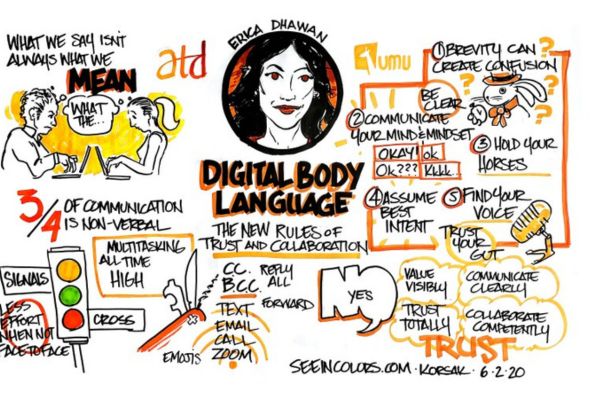
Have you ever considered how your Virtual body language conveys your identity? While face-to-face body language mainly focuses on gestures, facial expressions, and tone of voice. Whereas, tools to analyze digital engagement convert these cues into written words, response times, and online activities. With screens usurping so many of our in-person interactions, grasping these nuances has never felt more imperative. Why does this matter? Each email, text, or post is a drop of paint in your portrait, as seen by others. A smile or a nod can help billow a message in real life, but digital collaboration needs an immediate companion. How do we mend this gap to build trust, communicate clearly, and avoid misunderstandings? The solution is to learn digital body language. Let us see how you can use this skill to enhance better communication to build strong personal and work-related relationships. The Top Signs of Good Digital Body Language Have you thought that what you do in an effective online interaction may mean more about who you are than your about page? In a world where screens mediate communication, every move you make on the digital chess board has meaning. Let’s explore some FAQs about Virtual body language: Is Your Message in the Writing? Text-Based Communication: Your writing transforms your message. What level of professionalism does your tone have? Some might consider a “Got it” efficient; others dismiss it. Do you use emojis, punctuation (or lack thereof), or uppercase letters? These are considerations: “Well done!” is warmer than a great job. Does Your Timing in Responding Speak More Than What You Say? Timing can convey intention. Responding promptly may show concern or urgency, but does it seem too eager? If you take a while to answer, it can come across as you being busy or indifferent. But everything is time and place. A well-thought-out response at 2 AM may hold more weight than a hasty mid-afternoon reply. Engagement Metrics: What Your Digital Footprints Are Telling You Each touch has a footprint behind it. The various metrics tracking interest through clicks, shares, and time accrued by the content symbolize influence. Remember that consistent involvement establishes credibility in building trust online, while irregular appearance may need more determination. Unspoken Signals in Visual Talks: Are You Saying More than You Think? Whether on video chat or social media, the visuals communicate equally as your Text. Eye contact and facial expressions indicate attentiveness, while distractions signal disinterest. How you frame your background and camera can give a professional or unprofessional impression. Social Media Behavior: What Are You Storying Your Interactions As? Some actions you follow on social media: like, share, or comment, say something about yourself. Likes, shares, and comments will be support signals, granting increased propagation to messages you agree with. Do your connections mirror your passions and principles? The frequency and timing of your posts give more insights about you. Are you intentional and consistent in understanding digital communication signals, or is it just the thing to do? On the digital platform, you write your story through every interaction. Are you deliberately creating the narrative that others see? Why Does Digital Body Language Matter? Only through a screen is trust possible. So, yes, but with some clarity and purpose. In the paradigm of digital-first living, where email, IM, or video frequently replace in-person communication calls, every word and deed contributes to building and maintaining relationships. Now, recall the last time you were online. Did it build trust or leave you puzzled? Doing the former requires intentional digital body language. Your email, message tone, or reply time can deepen connections or cause unnecessary misunderstandings. This is particularly important in remote work, where misunderstandings can cause tensions between co-workers or groups. Besides, Digital communication strategies strengthen personal bonding and professional dealings. A detailed, warm message can cross the physical distance and endear itself to that person, while a casual or short text can push them miles away from you. When you perfect digital body language, every opportunity is embraced, and the atmosphere of trust and collaboration we understand very well can exist. How Do We Improve Digital Communication Skills? The spaces in between are the words we use in virtual body language; even the timing of your response to subtle signals, words, and general engagement patterns matters. Learning to read the signs can enable you to figure out what is going on inside your partner’s head, both their intentions and feelings. For example, if someone takes a long time to reply, it could mean that they are busy, not interested, or sick and tired of how to respond. But context is critical. So, an extended break during business hours may be understandable, but the same lag in a severe negotiation would certainly signal alarm bells. Accurate reading of these signals lets you respond promptly and appropriately. Differences drive difficulty in digitalization. While Cultural differences in online communication are not the only hindrances to digital adoption, they make a complicated situation even more complex. What is friendly and familiar in one culture might come off as too casual or even intrusive in another. For example, the overuse of emojis may come off as a friendly tone that is unprofessional to others. Understanding these differences helps you interact with a broader range of online spaces in a more attuned way. Tools and analytics can also help deliver insights into digital body language. Click-through rates, time spent on content, and engagement trends tell you what your audience does with your messages. Once you have this knowledge, you can refine and adapt your communication for maximal impact. What are you going to do about your digital body language? Do you know if the messages you send are received as intended? Having that intention and consistently expressing it, even when it feels forced, is the start of improving your digital body language. Decoding online communication needs a clear understanding of all potential nonverbal cues in digital spaces. Start with your writing, try to create clear, concise

How To Use Digital Body Language To Improve Communication Read More »

The Basics of International Trade: What You Need to Understand

What is international trade? And why does it matter in the world today? In its most basic form, global trade is exchanging goods and services between countries, allowing nations to access resources, products, and innovations that would not otherwise be achievable. It is the result of centuries of history, where, initially, simple barter helped establish what we often see as a complex network for trade when exchanging physical objects on our planet. How did international trade become so entrenched in the economies of nation-states? Global trade expanded ever faster throughout history, propelled by empires, monetary reforms, technological innovations, and trade agreements. Each transition not only changed economic interdependence but also expanded the geography of trade. From the Silk Road to Ind today, in our Voice and I, each had its own time worldwide. What are the reasons for studying international trade in an increasingly globalized world? The importance of global trade is undergoing tremendous change, driven by digitalization, sustainability issues, and geopolitical circumstances that affect economies, jobs, and individual lives across the globe. With a basic understanding of international trade, we can see how the history of international trade has shaped the trends that affect and will continue to impact our global economy for years. Barter to Money: The Evolution of Trade The Transition from Barter to Currency What is the Evolution of trade systems? What motivated humans to shift from essential exchanges of goods and services to more sophisticated trading systems? While ancient cultures traded physical products through barter, the clearly defined needs of this technique naturally made a method for a more accessible exchange based upon fixed values, leading to the standardized currency that significantly changed trade and business. Silk Road (130 BCE – 1453 CE) Why was the Silk Road the lifeblood of ancient global trade? Covering 6,400 km and connecting Asia with Europe and Africa, these ancient trade routes and empires facilitated the exchange of silk, spices, ideas, and technologies that defined entire civilizations. Seas became the highways of antiquity’s commerce. What were the maritime trade routes? The expansion of the Mediterranean, led by the Phoenicians and Egyptians, among other ancient seafaring civilizations, paved the way for global trade and the exchange of ideas. The spice trade (15th – 17th centuries) What were Europeans willing to risk a difficult journey for the taste of the East? Many spices, such as pepper, cinnamon, and cloves, were in great demand in Europe, leading to competitive assertions to establish trade routes to Asia. Until 1498, what we now understand as globalization was limited to historical trade routes in the East and West until the Portuguese discovered a new sea route to India. The impact of the spice trade redefined global commerce by enriching European merchants. The Connection Between Global Empires and Trade Growth The Age of Exploration (15th – 18th centuries) What role did European exploration play in changing the course of global trade and empire-building? Motivated by wealth, European countries opened up and set sail to new worlds where colonies would bring about great global trade. The rediscovery of the New World by the time Christopher Columbus sailed in 1492, financed through Spain, began a period of trade—wiping out and forever changing the economic foundation of cultures found in America. The Atlantic Slave Trade (16th – 19th centuries) What devastating human costs did the Atlantic Slave Trade impose on global economies? Trade during the age of exploration was driven by the need for a labor force on plantations in Europe; the transatlantic slave trade saw an estimated 12 million Africans transported against their will, irreparably damaging African societies and boosting the wealth of colonial economies through slave labor. Mercantilism and Colonial Economies In What Ways Did European Empires Exploit Their Colonies for Profits? Godfrey (2008) argues that at the heart of mercantilist policies, European countries drew resources from colonies, limiting native economic independence and development — fostering dependence. Colonies supplied Europe with raw materials and served as outlets for European manufactured goods, a system that made empires wealthy while impoverishing local economies. The Connection Between Industrial Growth and Global Markets 18th – 19th centuries The impact of the Industrial Revolution on trade was a significant milestone in International trade. How did the Industrial Revolution lead to a global demand for resources and markets? Industrial countries, meanwhile, turned to raw materials and new markets to take up the slack of expanding mass production. With the invention of the steam engine, transportation and shipping were again streamlined, as goods could reach faraway markets quickly and effectively. British Empire and Free Trade Ideals Why did the British Empire advocate free trade? Britain turned to free trade philosophies characterized, among other things, by the decisive repeal of the Corn Laws in 1846. This enabled the import of low-cost goods, aided in the growth of industries, and positioned Britain perfectly for domination over global trade routes. These were the deep-rooted causes of the British Empire’s free trade policies.  Why Fair Trade Matters in a Globalized World Post-War Trade Organizations What is the post-World War II framework for international trade? Countries created organizations such as the General Agreement on Tariffs and Trade, or GATT, in 1947 as Post-war trade organizations, which became the World Trade Organization, or WTO, in 1995 to reconstruct and stabilize a global economy. These organizations aimed to reduce trade barriers and encourage a more equitable, free international trading system. Emergence of MNCs What made multinationals the main characters in global trade? MNCs’ role in trade grew to serve the world market by lowering costs and accessing different markets. International trade enabled brands such as Coca-Cola and McDonald’s to conquer the world, with products made available globally, resulting in our once-diverse economies falling into each other’s orbits. Free trade agreements and economic Blocs How do free trade agreements and economic blocs change the face of international commerce? Trade agreements like NAFTA (USMCA now) and the EU lower tariffs and trade barriers so that goods and services can be exchanged more

The Basics of International Trade: What You Need to Understand Read More »

Scroll to Top