The Basics of International Trade: What You Need to Understand
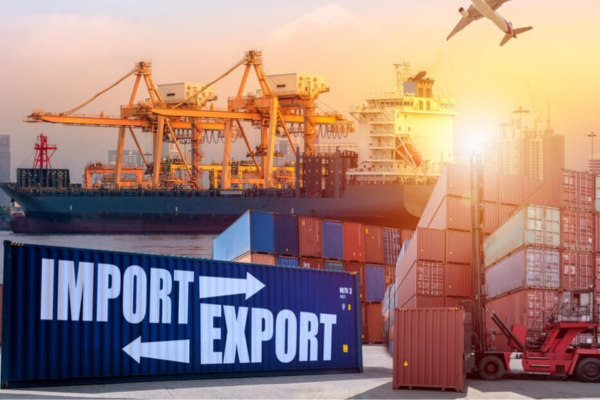
What is international trade? And why does it matter in the world today? In its most basic form, global trade is exchanging goods and services between countries, allowing nations to access resources, products, and innovations that would not otherwise be achievable. It is the result of centuries of history, where, initially, simple barter helped establish what we often see as a complex network for trade when exchanging physical objects on our planet. How did international trade become so entrenched in the economies of nation-states? Global trade expanded ever faster throughout history, propelled by empires, monetary reforms, technological innovations, and trade agreements. Each transition not only changed economic interdependence but also expanded the geography of trade. From the Silk Road to Ind today, in our Voice and I, each had its own time worldwide. What are the reasons for studying international trade in an increasingly globalized world? The importance of global trade is undergoing tremendous change, driven by digitalization, sustainability issues, and geopolitical circumstances that affect economies, jobs, and individual lives across the globe. With a basic understanding of international trade, we can see how the history of international trade has shaped the trends that affect and will continue to impact our global economy for years. Barter to Money: The Evolution of Trade The Transition from Barter to Currency What is the Evolution of trade systems? What motivated humans to shift from essential exchanges of goods and services to more sophisticated trading systems? While ancient cultures traded physical products through barter, the clearly defined needs of this technique naturally made a method for a more accessible exchange based upon fixed values, leading to the standardized currency that significantly changed trade and business. Silk Road (130 BCE – 1453 CE) Why was the Silk Road the lifeblood of ancient global trade? Covering 6,400 km and connecting Asia with Europe and Africa, these ancient trade routes and empires facilitated the exchange of silk, spices, ideas, and technologies that defined entire civilizations. Seas became the highways of antiquity’s commerce. What were the maritime trade routes? The expansion of the Mediterranean, led by the Phoenicians and Egyptians, among other ancient seafaring civilizations, paved the way for global trade and the exchange of ideas. The spice trade (15th – 17th centuries) What were Europeans willing to risk a difficult journey for the taste of the East? Many spices, such as pepper, cinnamon, and cloves, were in great demand in Europe, leading to competitive assertions to establish trade routes to Asia. Until 1498, what we now understand as globalization was limited to historical trade routes in the East and West until the Portuguese discovered a new sea route to India. The impact of the spice trade redefined global commerce by enriching European merchants. The Connection Between Global Empires and Trade Growth The Age of Exploration (15th – 18th centuries) What role did European exploration play in changing the course of global trade and empire-building? Motivated by wealth, European countries opened up and set sail to new worlds where colonies would bring about great global trade. The rediscovery of the New World by the time Christopher Columbus sailed in 1492, financed through Spain, began a period of trade—wiping out and forever changing the economic foundation of cultures found in America. The Atlantic Slave Trade (16th – 19th centuries) What devastating human costs did the Atlantic Slave Trade impose on global economies? Trade during the age of exploration was driven by the need for a labor force on plantations in Europe; the transatlantic slave trade saw an estimated 12 million Africans transported against their will, irreparably damaging African societies and boosting the wealth of colonial economies through slave labor. Mercantilism and Colonial Economies In What Ways Did European Empires Exploit Their Colonies for Profits? Godfrey (2008) argues that at the heart of mercantilist policies, European countries drew resources from colonies, limiting native economic independence and development — fostering dependence. Colonies supplied Europe with raw materials and served as outlets for European manufactured goods, a system that made empires wealthy while impoverishing local economies. The Connection Between Industrial Growth and Global Markets 18th – 19th centuries The impact of the Industrial Revolution on trade was a significant milestone in International trade. How did the Industrial Revolution lead to a global demand for resources and markets? Industrial countries, meanwhile, turned to raw materials and new markets to take up the slack of expanding mass production. With the invention of the steam engine, transportation and shipping were again streamlined, as goods could reach faraway markets quickly and effectively. British Empire and Free Trade Ideals Why did the British Empire advocate free trade? Britain turned to free trade philosophies characterized, among other things, by the decisive repeal of the Corn Laws in 1846. This enabled the import of low-cost goods, aided in the growth of industries, and positioned Britain perfectly for domination over global trade routes. These were the deep-rooted causes of the British Empire’s free trade policies. Why Fair Trade Matters in a Globalized World Post-War Trade Organizations What is the post-World War II framework for international trade? Countries created organizations such as the General Agreement on Tariffs and Trade, or GATT, in 1947 as Post-war trade organizations, which became the World Trade Organization, or WTO, in 1995 to reconstruct and stabilize a global economy. These organizations aimed to reduce trade barriers and encourage a more equitable, free international trading system. Emergence of MNCs What made multinationals the main characters in global trade? MNCs’ role in trade grew to serve the world market by lowering costs and accessing different markets. International trade enabled brands such as Coca-Cola and McDonald’s to conquer the world, with products made available globally, resulting in our once-diverse economies falling into each other’s orbits. Free trade agreements and economic Blocs How do free trade agreements and economic blocs change the face of international commerce? Trade agreements like NAFTA (USMCA now) and the EU lower tariffs and trade barriers so that goods and services can be exchanged more
The Basics of International Trade: What You Need to Understand Read More »